Author: samira

  • Facilitator, in person, Her Circle Table Talks

    Facilitator, in person, Her Circle Table Talks

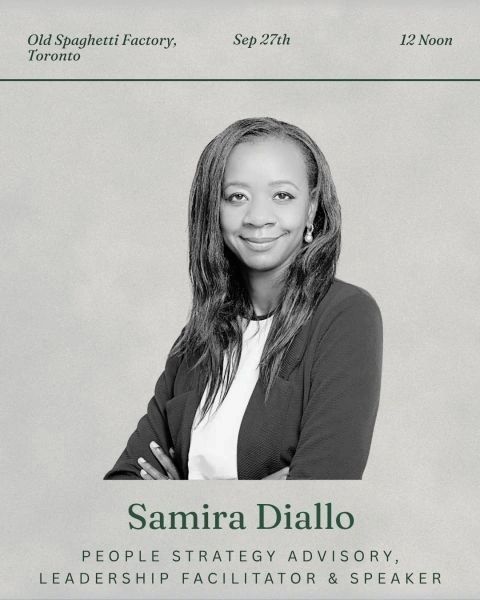
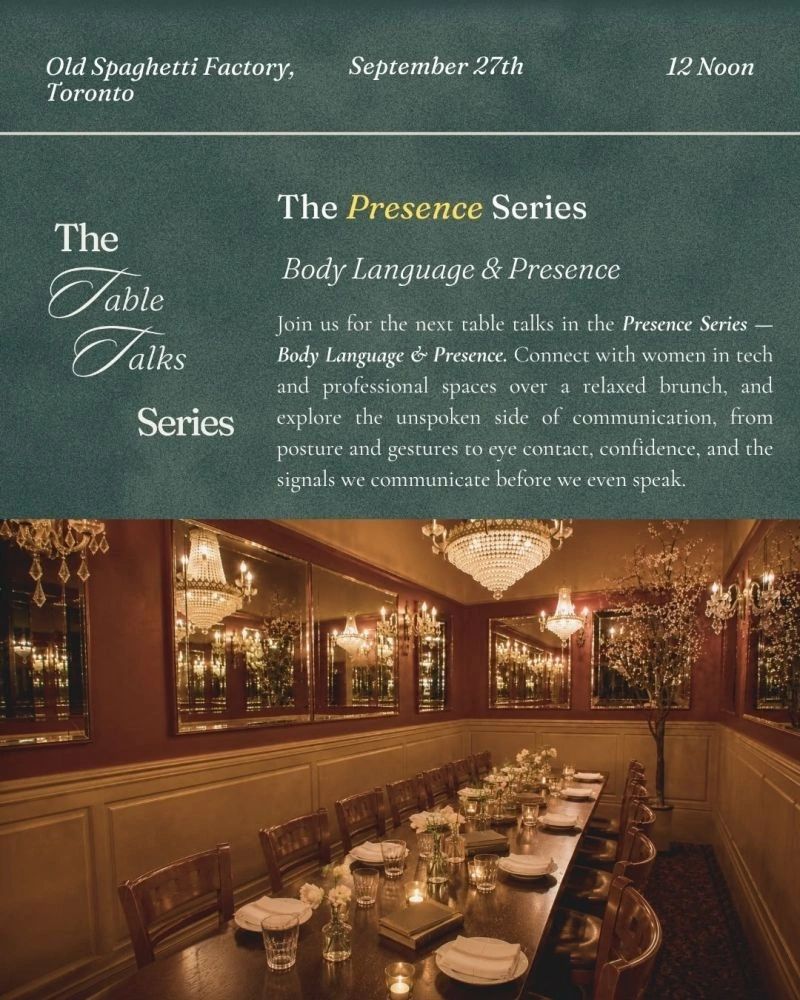
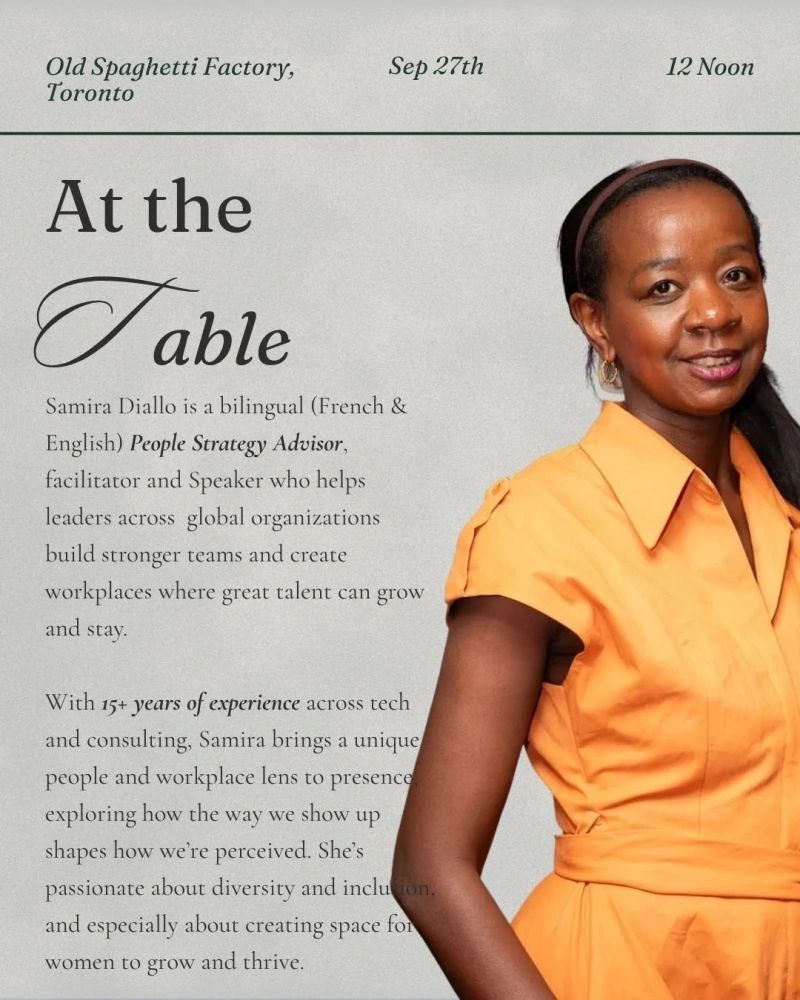
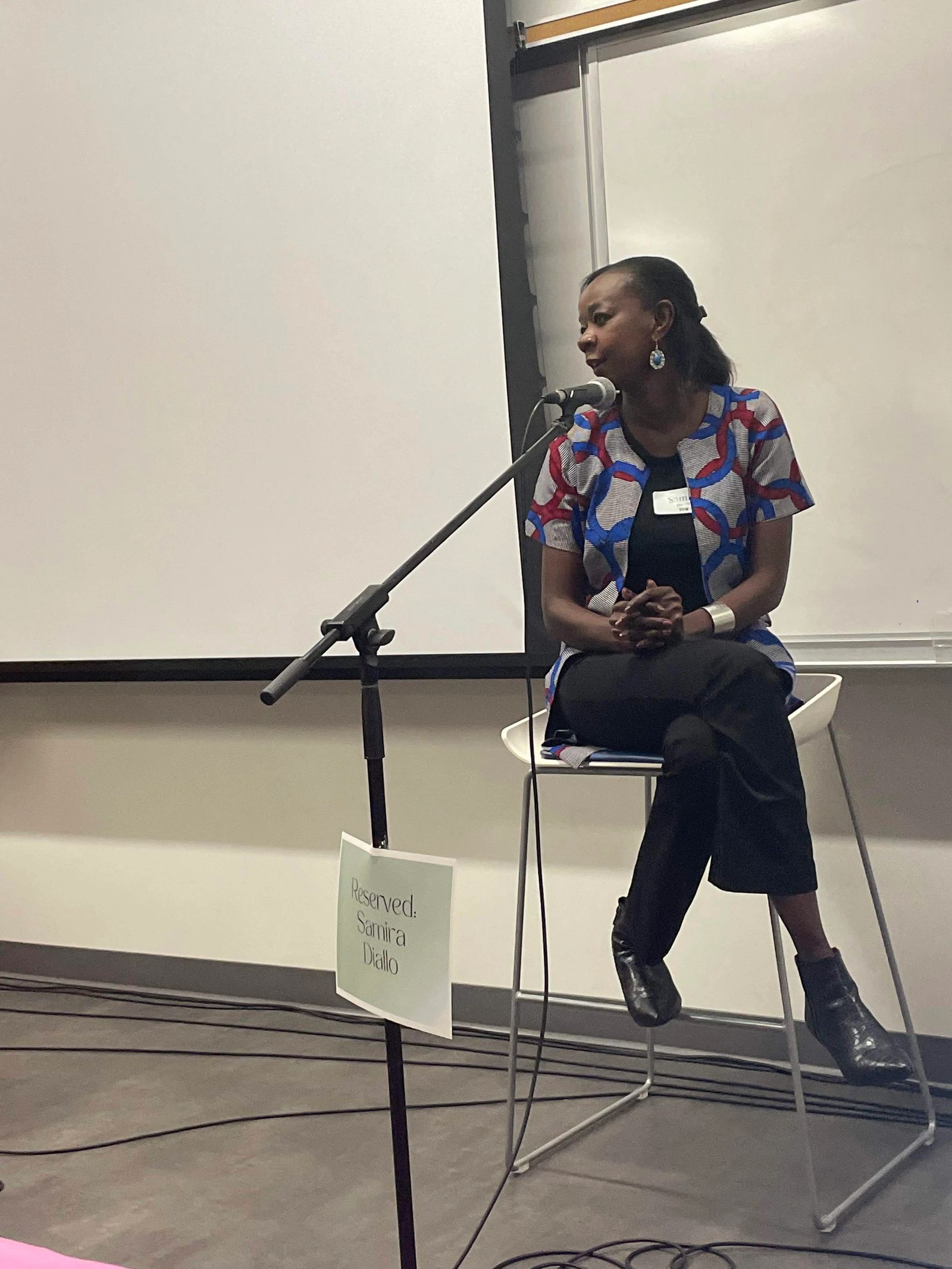
    Facilitated the Her Circle Table Talks in person in Toronto on body language and presence. An interactive roundtable discussion with 16 women on how we carry ourselves, our nervous habits, and what our body language says before we speak.

    “It was a good reminder that confidence is often built through preparation, practice, and sometimes even the small things, like choosing an outfit that helps you feel your best. Thank you Samira Diallo for facilitating the talk and help everyone feel included.”Participant

    “Thank you so much for facilitating the experience Samira! We truly appreciated the thoughtful way you guided the discussion and created such a warm, calm, and welcoming space for everyone to participate. We’re grateful to have had you with us!”Event co-host

    Photos: JustMomentography

    ← Back to Workshop & Speaking

  • What a people audit actually looks like

    What a people audit actually looks like

    Retention

    When a founder asks me what a people audit actually involves, this is the answer.

    Why do a people audit

    When turnover climbs or hiring starts to feel harder, the cause is often spread across several places. A people audit looks at the whole picture, so you fix the real problem and stop guessing.

    The 5 areas I look at

    • Hiring. How long it takes, who decides, and what happens between the offer and day 1. Slow or unclear hiring loses good candidates to faster companies.
    • Onboarding. What a new person gets in week 1, and who owns them in month 3. The first months shape whether someone settles in or starts looking again.
    • Performance. Whether managers are having the hard conversations, and what happens when someone is below the bar. Avoided conversations cost you the respect of your strongest people.
    • Retention. Who left in the last 18 months, and what they actually said on the way out. Exit reasons show you where to act first.
    • Pay. Whether 2 people doing the same job are paid the same, and whether you can explain the difference. Unexplained gaps create risk and damage trust.

    I look at how these run in practice. What the policy document says is a separate question, and usually a different answer.

    What you get

    You end up with a short list: what is costing you money, and what to fix first. Your next people decision is then based on what is really happening in your company.

    Signs it is time for a people audit

    • Turnover is climbing and nobody can tell you exactly why
    • Managers handle the same people issue in different ways
    • The team grew fast and your processes stayed the same

    3 questions to ask yourself today

    • Could I explain why the last 3 people who resigned left?
    • Does every new hire get the same first week, whoever their manager is?
    • If an employee asked how their pay was set, could I answer clearly?

    If any of these was hard to answer, that is where an audit starts.

    If turnover is climbing and nobody can tell you exactly why, book a call.

    Samira Diallo

    About the author

    Samira Diallo

    Bilingual (French/English) people strategy advisor, facilitator and speaker based in Toronto. 15+ years in global tech consulting at Capgemini and Oracle, on the tech project side and the people side.

    • People operations for 2,000+ employees
    • 95% retention on a 40+ person consulting team
    • Programs across the whole employee lifecycle

    ← All insights

  • The 5 facilitation sessions organizations ask for most

    The 5 facilitation sessions organizations ask for most

    Facilitation

    A session works when people leave with something they can act on Monday.

    That is what I am hired to run. These are the 5 sessions organizations ask for most, who each one is for, and what people leave with.

    1. Leadership development

    For managers who were promoted because they were good at the work and are now responsible for people. They leave with a clearer picture of their new role, simple ways to give feedback, and a plan for their next 1 on 1s.

    2. Team sessions

    For when something is not being said out loud and the team has started working around it. People leave having named the issue together, with agreements on how they will work from now on.

    3. Career and progression workshops

    So people know what growth looks like here and how to ask for it. Participants leave knowing the paths open to them and how to start that conversation with their manager.

    4. Women’s leadership programs

    Covering presence, visibility and negotiation. Participants leave with practical tools they can use in their next meeting, their next review and their next salary conversation.

    5. Strategy and planning days

    Sessions that end with decisions. The group leaves with clear priorities, owners and next steps written down.

    How to get the most from a session

    • Start with the problem. Tell your facilitator what is happening and what you want to be different after the session. Why: the agenda is built around your outcome.
    • Invite the right people. The people who will act on the decisions need to be in the room. Why: decisions stick when the people doing the work helped make them.
    • Plan the follow-up before the day. Book a short check-in 2 to 4 weeks later. Why: this is where commitments turn into action.

    How I work in the room

    I run sessions in English and in French, in person and online.

    My job in the room is to get people talking to each other, keep it on track, and get you to that Monday.

    If you have a group, a problem and a date, book me.

    Samira Diallo

    About the author

    Samira Diallo

    Bilingual (French/English) people strategy advisor, facilitator and speaker based in Toronto. 15+ years in global tech consulting at Capgemini and Oracle, on the tech project side and the people side.

    • People operations for 2,000+ employees
    • 95% retention on a 40+ person consulting team
    • Programs across the whole employee lifecycle

    ← All insights

  • Facilitatrice, Avancement des Femmes en Leadership – ICTC

    Facilitatrice, Avancement des Femmes en Leadership – ICTC

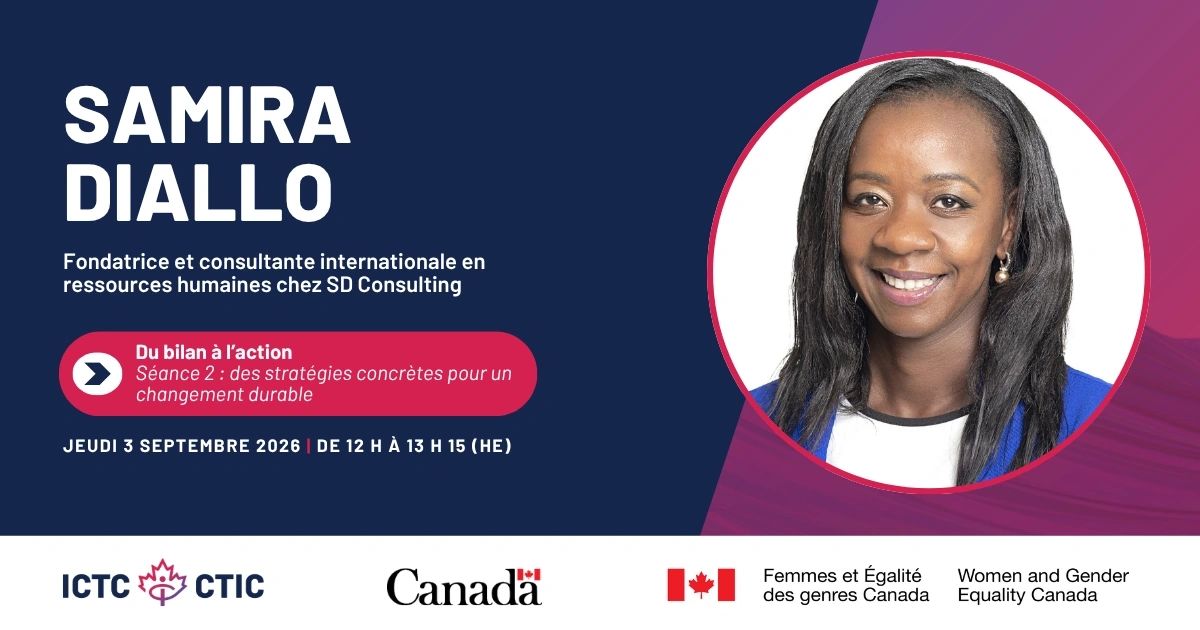
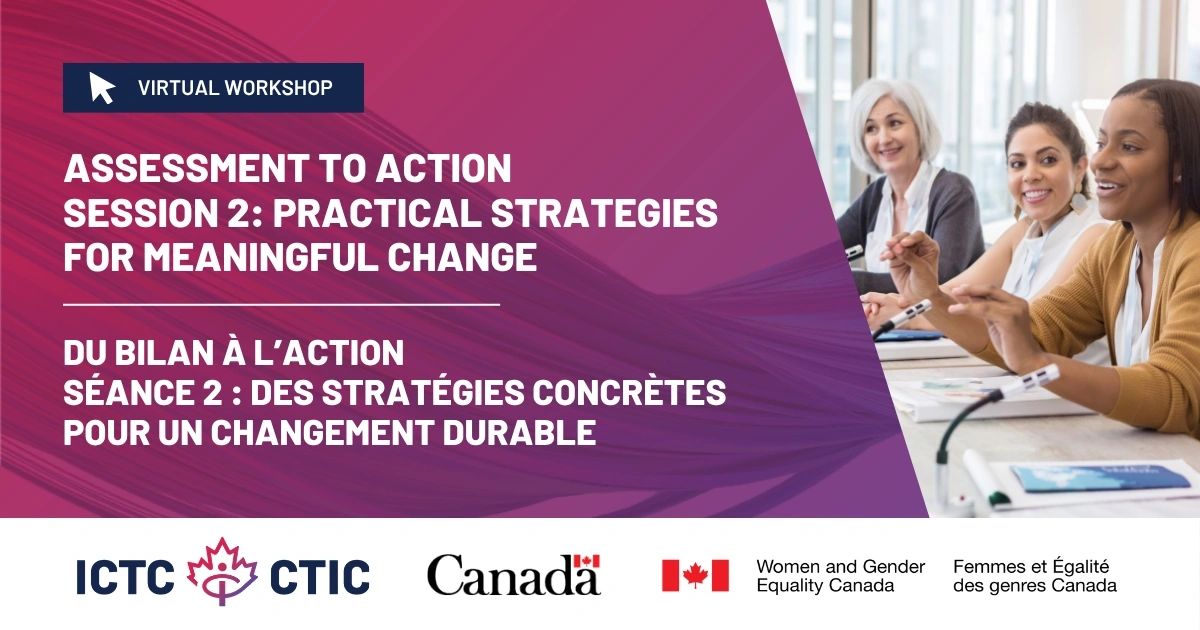
    Facilitatrice de 3 sessions en francais du programme Avancement des Femmes en Leadership du Conseil des technologies de l’information et des communications (CTIC). Un programme gratuit et bilingue qui accompagne les femmes dans le secteur numerique canadien.

    ——————-

    Facilitated 3 French sessions of the ICTC Advancing Women in Leadership program, a free bilingual program supporting women in Canada’s digital economy.

    ← Back to Workshop & Speaking

  • Podcast guest – HerStories avec Sirine

    Podcast guest – HerStories avec Sirine

    Invitee sur le podcast HerStories pour partager mon parcours de 15 ans en conseil technologique vers la creation de SD Consulting et l’accompagnement des femmes dans leur carriere. J’ai vraiment adoré cette conversation avec Sirine pour Her Stories !

    On a parlé de mon arrivée au Canada sans parler anglais, de mon parcours en tech jusqu’à l’entrepreneuriat en stratégie humaine, de la maternité et du fait d’élever ses enfants tout en évoluant dans sa carrière, de réinvention professionnelle et bien plus.

    Le lien vers l’épisode 👇

    —–

    We talked about moving to Canada without speaking English, my journey from tech to entrepreneurship in people strategy, motherhood and raising kids while growing my career, reinventing yourself professionally, and so much more.

    Guest on the HerStories podcast sharing my journey from 15 years in tech consulting to building SD Consulting and supporting women in their careers.

    The link to the episode 👇

    Spotify: https://open.spotify.com/show/2982PwyhIqBL6SqIN0mELN

    Video extract: https://www.instagram.com/reel/Ddb-kfMxxsx/

    ← Back to Workshop & Speaking

  • 73% of employees would stay longer if you invested in their growth

    73% of employees would stay longer if you invested in their growth

    Learning and development

    73% of employees say they would stay longer if their company invested more in their growth.

    If you are a founder or business owner growing your team, that number should matter to you. Hiring gets you the people. Developing them is what keeps them.

    Why growth keeps people

    • People stay where they can see a future. When the next step is clear, they have a reason to build it with you.
    • Growth builds confidence. A person who is learning brings more ideas and takes on more responsibility.
    • It fills your own pipeline. The leaders you need in 2 years can come from the team you have today.

    Learning and development for a growing company

    You do not need a big budget or a training department to start. Development in a growing company can be simple:

    • Stretch projects with support from a manager
    • Mentoring between senior and junior people
    • Learning budgets people can use for a course or a conference
    • Short internal sessions where people teach what they know
    • Leadership training for new managers

    5 steps to start this quarter

    1. Ask each person what they want to learn next. Why: the best plan starts from what people actually want.
    2. Write down what growth looks like for each role. Why: people can only aim for a next step they can see.
    3. Add a development question to every 1 on 1. Why: it keeps growth part of the regular conversation.
    4. Give every manager a small budget or time allowance for development. Why: managers can act quickly when someone is ready.
    5. Check in every 6 months on who has grown and who has stalled. Why: someone who has stalled may already be looking elsewhere.

    What I have seen work

    In my corporate roles, I grew a leadership program to more than 1,000 attendees across 20+ global offices. I also designed and led an entry-level career program for women in tech. Both showed me how much people value a clear path forward.

    Learning and development is how you build a company people want to stay and grow in.

    If this feels like a gap in your company, reach out. This is exactly the kind of work I do with founders and leadership teams.

    Samira Diallo

    About the author

    Samira Diallo

    Bilingual (French/English) people strategy advisor, facilitator and speaker based in Toronto. 15+ years in global tech consulting at Capgemini and Oracle, on the tech project side and the people side.

    • People operations for 2,000+ employees
    • 95% retention on a 40+ person consulting team
    • Programs across the whole employee lifecycle

    ← All insights

  • How do you navigate all the different parts of who you are at work?

    How do you navigate all the different parts of who you are at work?

    Belonging

    This is something I have thought about throughout my career.

    I grew up between France and Niger, and later built my career in North America. Moving between cultures taught me how to adapt, observe, and understand different environments.

    But when I entered the corporate world in Canada and the US, I realized there were new rules to learn. Many of them were never written down.

    I was navigating being an immigrant, French-speaking, African, and a woman building credibility in corporate spaces.

    I learned how to code-switch. I adjusted how I communicated. I paid attention to how I showed up in meetings and how I was perceived.

    Sometimes it was small moments that reminded me I was different. Being the only person in the room with my background. Questions about my hair. Trying to understand workplace expectations that seemed natural to others but were new to me.

    Then came the pandemic. Like many people, I was carrying what was happening in the world while still showing up at work. Projects continued. Meetings continued. But personally, there were moments when it took extra energy to focus and perform while processing everything happening around me.

    What made the difference

    What made a difference were the people and communities around me. Managers who checked in. Leaders who created space for honest conversations. Employee resource groups, mentors, and allies who helped create environments where people could connect and feel seen.

    Those experiences shaped how I think about workplaces today.

    Why belonging matters for the business

    Code-switching takes energy. Every hour someone spends adjusting, explaining or proving they belong is energy that could go into their work. When people feel they belong, they can focus their energy on doing their best work. They also share ideas more freely, and they stay longer.

    5 things leaders can do

    1. Check in on the person, beyond the project. A simple “how are you really doing?” in a 1 on 1. Why: people bring their whole life to work, especially in hard moments.
    2. Write down the unwritten rules. How decisions are made, how promotions work, what good looks like. Why: clear rules help everyone, and they help newcomers most.
    3. Support employee resource groups with time and budget. Why: they give people a community and give leaders honest feedback.
    4. Notice who speaks in meetings, and invite the quiet voices in. Why: the best idea in the room is sometimes the one nobody heard.
    5. Ask people what would help them do their best work, then act on what you hear. Why: belonging is built through action, one conversation at a time.

    Creating belonging is about creating cultures where people can show up fully, where different backgrounds and experiences are valued, and where people can put their energy into their work.

    For leaders and organizations: what are you doing to make sure people from different backgrounds feel they truly belong?

    If you want to build this in your team, let’s talk.

    Samira Diallo

    About the author

    Samira Diallo

    Bilingual (French/English) people strategy advisor, facilitator and speaker based in Toronto. 15+ years in global tech consulting at Capgemini and Oracle, on the tech project side and the people side.

    • People operations for 2,000+ employees
    • 95% retention on a 40+ person consulting team
    • Programs across the whole employee lifecycle

    ← All insights

  • HR and people strategy are not the same thing

    HR and people strategy are not the same thing

    People strategy

    HR and people strategy are not the same thing. Fast-growing companies need both.

    When a company is small, the founder does both without thinking about it. They hire, they pay people, they decide who gets promoted. Then the team grows to 30, 50 or 100 people and the questions change. This is the moment the gap between HR and people strategy starts to show.

    HR is the foundation

    HR protects the company and the people in it. It covers the work that has to be right every single time:

    • Payroll and benefits
    • Contracts and offer letters
    • Compliance with employment law
    • Policies people can find and understand
    • Employee relations, when something goes wrong

    Without this foundation, growth creates risk. A missed contract clause or an inconsistent policy can cost far more than it would have taken to set up properly.

    People strategy is the direction

    People strategy connects your business goals to your people decisions. It answers the questions that keep founders up at night:

    • Who do we need to hire for where we are going next?
    • Are our managers ready to lead a bigger team?
    • Why are good people leaving, and what do we do about it?
    • What kind of culture do we want to build as we grow?
    • How do we keep people engaged when the company changes every few months?

    What it looks like when one is missing

    HR without people strategy keeps the lights on, but the business stays stuck. You see it when:

    • You keep replacing people when you could be growing them
    • Strong individual contributors are promoted into management with no preparation
    • Exit interviews are filed and nobody reads them

    People strategy without HR creates vision without the infrastructure to support it. Big culture ideas sit on top of outdated contracts, pay decisions nobody can explain and no clear owner when an employee issue comes up.

    Together they build a company where people stay, grow and perform.

    What I saw from both sides

    I spent 15 years in tech consulting, leading large technology projects and the people side of the teams delivering them. I led a team of 40+ consultants across North America with 95% retention. That number came from paying attention to people: what they wanted next, and whether they could see a future on the team.

    Where to start

    1. Check your HR basics. Contracts up to date, a payroll process that works, policies people can find. Why: everything else sits on this.
    2. Write down where the business is going in the next 12 to 18 months. Then ask what that means for your team. Why: hiring only for today keeps you 1 step behind.
    3. Look at who left in the last year, and why. Why: the pattern shows you where to act first.
    4. Ask your managers what they need to lead well. Why: managers have the biggest influence on whether people stay.
    5. Pick 1 people priority for the next quarter and give it an owner. Why: a strategy becomes real when someone is accountable for it.

    How I help

    Here is what I help founders and leadership teams build:

    • Retention strategy before turnover becomes a crisis
    • Onboarding programs that set people up to stay
    • Performance management that is fair and consistent
    • Leadership development for managers who were promoted without preparation
    • A culture framework that grows with the team

    If your team is growing and your people strategy has not caught up yet, let’s talk.

    Samira Diallo

    About the author

    Samira Diallo

    Bilingual (French/English) people strategy advisor, facilitator and speaker based in Toronto. 15+ years in global tech consulting at Capgemini and Oracle, on the tech project side and the people side.

    • People operations for 2,000+ employees
    • 95% retention on a 40+ person consulting team
    • Programs across the whole employee lifecycle

    ← All insights

  • Women in Canada’s digital economy: a systems gap

    Women in Canada’s digital economy: a systems gap

    Women in tech

    English

    34.8% of women work in Canada’s digital economy. Only 9% reach leadership roles.

    That is not a talent gap. That is a systems gap.

    What a systems gap looks like

    The women are there. The drop happens on the way up, in the everyday systems that decide who moves forward:

    • Hiring. Who writes the job descriptions, who sits on the interview panel, and what counts as the right profile.
    • Promotion. Whether the criteria are written down, or decided in rooms where some people are present and others are not.
    • Sponsorship. Who gets the visible projects and who gets named when a leadership role opens.

    None of these depend on talent. They depend on how the organization is built, and that means they can be changed.

    5 things an organization can do this year

    1. Look at your numbers by level. Count women at each step from entry level to leadership. Why: the step where the number drops is where to act first.
    2. Write down your promotion criteria. Why: clear criteria make the decision fairer and easier to explain.
    3. Use a mixed interview panel. Why: different people notice different strengths.
    4. Pair high-potential women with sponsors, senior leaders who will put their name forward. Why: mentors give advice, sponsors open doors.
    5. Check who gets the visible projects. Why: visible work is often what leads to the next role.

    A free tool to start

    I facilitated the first French session of ICTC’s “Advancing Women’s Leadership” program, alongside Farzeen Foda for the English version.

    ICTC’s Equitable Leadership Assessment Tool is free, bilingual, and takes about 20 minutes. It evaluates 4 areas (leadership accountability, talent acquisition, career mobility, and workplace experience) and gives you concrete recommendations tailored to your organization.

    Tool: etalentcanada.ca/equitable-leadership-assessment

    If you want help turning the results into a plan, send me a message.

    Français

    34,8% des femmes travaillent dans l’économie numérique canadienne. Seulement 9% se retrouvent aux postes de direction.

    Ce n’est pas un manque de talent. C’est un manque de systèmes.

    J’ai animé la première séance en français du programme « Promouvoir le leadership des femmes » du CTIC, aux côtés de Farzeen Foda pour la version anglaise.

    L’outil d’évaluation du leadership équitable du CTIC est gratuit, en français, et prend environ 20 minutes. Il évalue 4 domaines clés (responsabilité, recrutement, mobilité de carrière et expérience en milieu de travail) et vous donne des recommandations concrètes adaptées à votre organisation.

    Outil : etalentcanada.ca/equitable-leadership-assessment

    Samira Diallo

    About the author

    Samira Diallo

    Bilingual (French/English) people strategy advisor, facilitator and speaker based in Toronto. 15+ years in global tech consulting at Capgemini and Oracle, on the tech project side and the people side.

    • People operations for 2,000+ employees
    • 95% retention on a 40+ person consulting team
    • Programs across the whole employee lifecycle

    ← All insights

  • How your team can know where they stand before review day

    How your team can know where they stand before review day

    Performance

    Many employees find out how they are really doing on review day. By then, it is too late to fix anything.

    For a growing company, this is expensive. A surprise in a review damages trust. Good people start looking elsewhere, and managers spend weeks repairing the relationship.

    Why review day goes wrong

    • Expectations were never written down, so each person guessed what good looks like
    • Feedback was saved up for 1 meeting a year
    • Managers were promoted because they were good at the work, and nobody showed them how to give feedback

    What good looks like

    At any point in the year, every person on your team should be able to answer 3 questions:

    • What is expected of me?
    • How am I doing right now?
    • What do I need to do to grow?

    The solution is almost always the same: clear expectations from day 1, and regular check-ins through the year in place of 1 stressful review meeting.

    5 steps to get there

    1. Write clear expectations for every role in the first 30 days. Why: people cannot hit a target they cannot see.
    2. Hold a short check-in every 2 to 4 weeks. 15 to 20 minutes on progress and blockers. Why: small corrections early prevent big surprises later.
    3. Give feedback in the same week it happens. Why: feedback lands best while the moment is still fresh.
    4. Write down what was agreed. A short shared note after each check-in. Why: on review day, nothing is new and both sides have the same record.
    5. Prepare your managers to lead these conversations. Why: the process only works when managers feel confident running it.

    What changes

    • The review becomes a summary of conversations you already had
    • Fewer surprises, fewer escalations to leadership
    • People know what growth looks like and how to get there

    If your team does not know where they stand right now, that is worth fixing before your next review cycle.

    Want a performance process that works for your team? See how I work with organizations or send me a message.

    Samira Diallo

    About the author

    Samira Diallo

    Bilingual (French/English) people strategy advisor, facilitator and speaker based in Toronto. 15+ years in global tech consulting at Capgemini and Oracle, on the tech project side and the people side.

    • People operations for 2,000+ employees
    • 95% retention on a 40+ person consulting team
    • Programs across the whole employee lifecycle

    ← All insights